- By Admin
- 13 Jul, 2026
- Fashion Retail POS
Fashion retail depends on speed and accuracy: knowing what's in stock, billing customers quickly, and keeping records that hold up under tax scrutiny. Many stores still rely on manual processes for these tasks, and the gaps show up in lost sales, slow checkouts, and stock that never quite matches what's on the shelf.
Below are five problems that come up repeatedly in fashion and lifestyle retail, along with practical fixes for each.
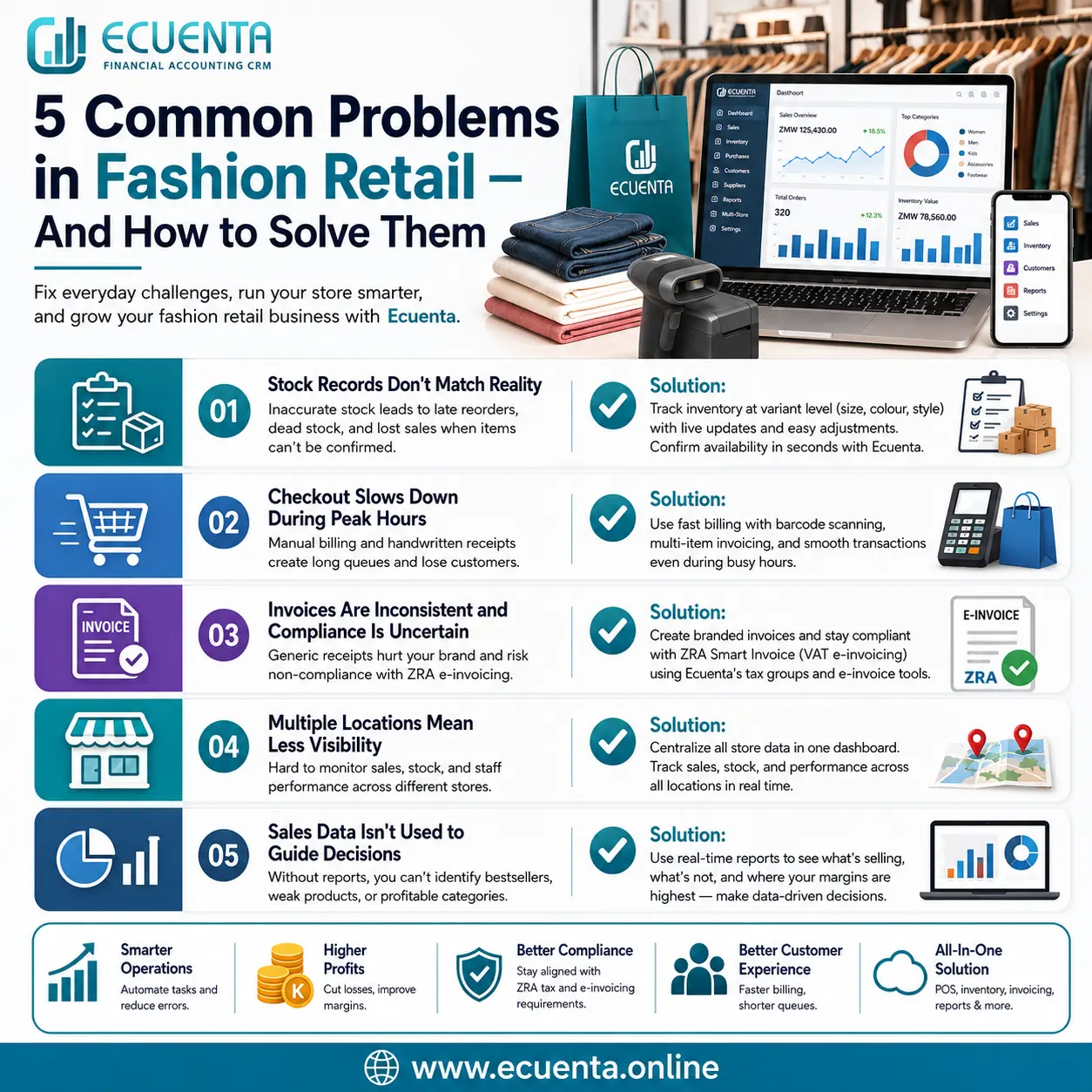
Problem 1: Stock Records Don't Match Reality
A customer asks for a specific size or colour. The answer should be immediate. Instead, staff check a notebook, search the back room, or guess. The gap between recorded stock and actual stock leads to late reorders, unnoticed dead stock, and lost sales when items can't be confirmed on time.
Solution: Track inventory at the variant level — size, colour, style — not just by product name. Live stock checks and adjustment tools remove the guesswork. With Ecuenta's inventory module, staff can confirm availability in seconds instead of minutes, because stock counts update as sales happen.
Problem 2: Checkout Slows Down During Peak Hours
Manual calculations and handwritten receipts don't scale when several customers are waiting. Slow checkout doesn't just frustrate the people already in line — it discourages new customers from entering a busy store.
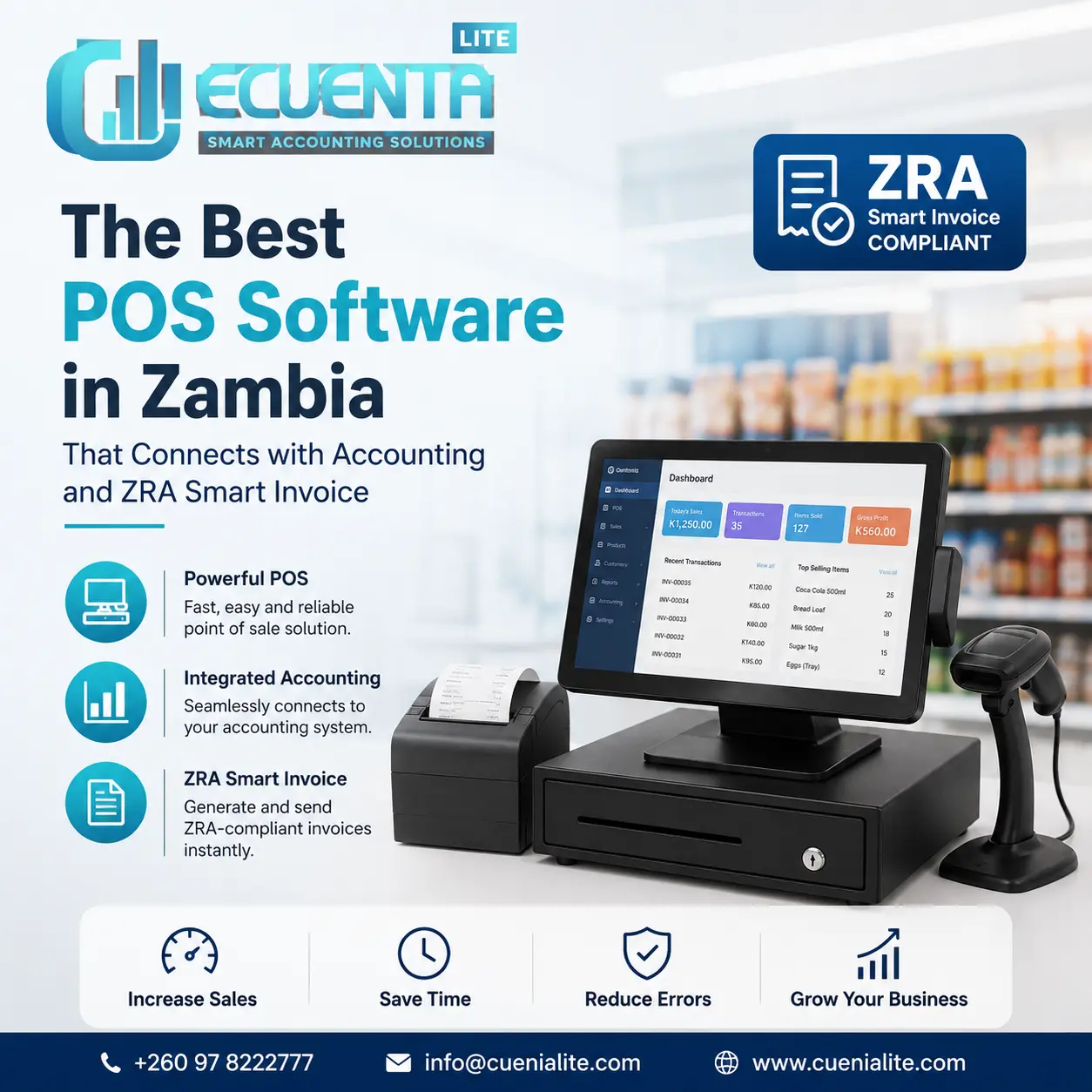
Solution: Use billing software built for speed: barcode scanning, multi-item invoicing, and support for handling several transactions without delay. Ecuenta's smart invoice billing module is designed for exactly this — faster billing and smoother checkouts, even during high-traffic periods.
Problem 3: Invoices Are Inconsistent and Compliance Is Uncertain
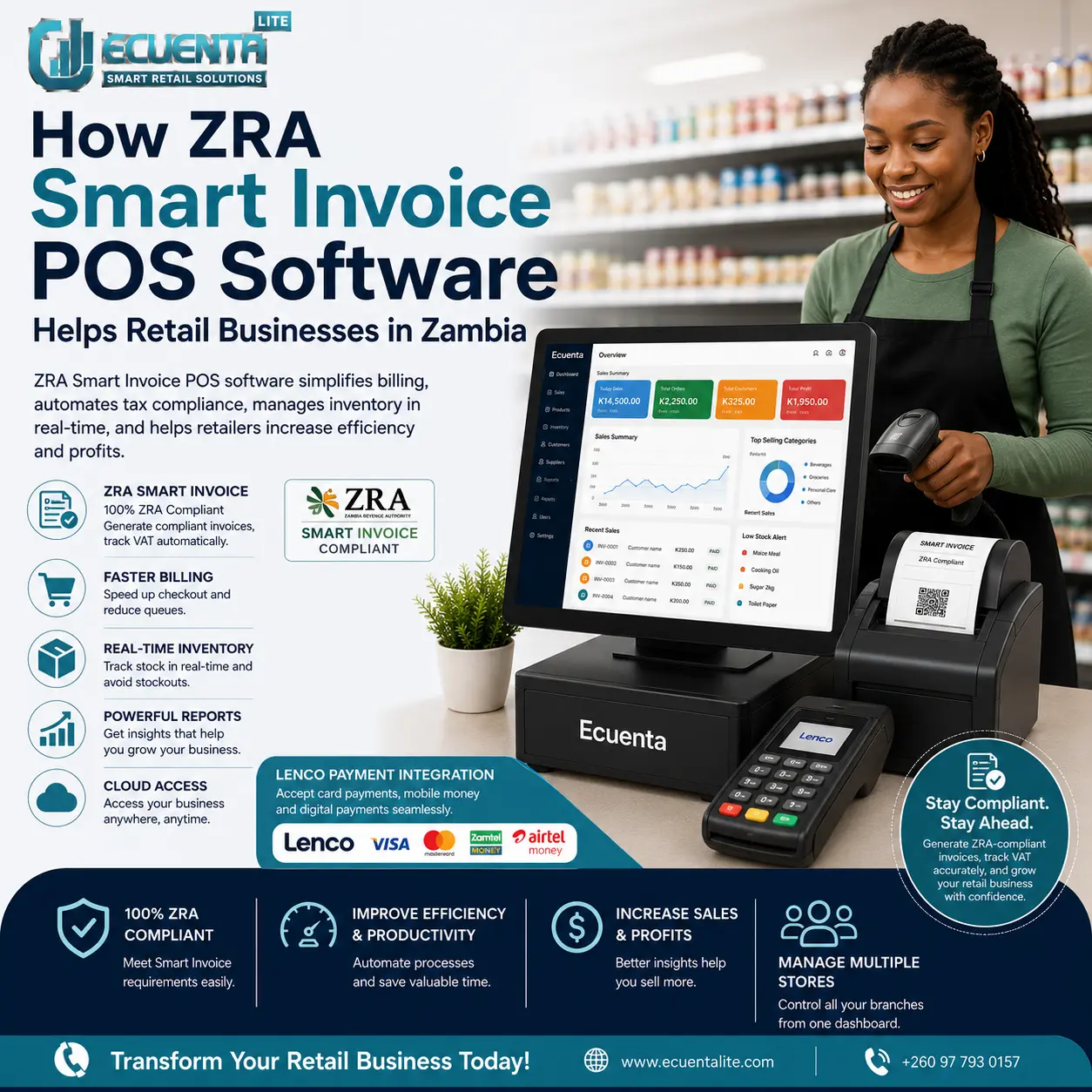
Two issues sit inside this problem. First, handwritten or generic receipts don't reflect the store's brand. Second, and more significantly, Zambian tax requirements have changed. Since July 2024, VAT-registered businesses have been expected to issue e-invoices in line with ZRA's Smart Invoice system. Falling behind on this isn't a minor administrative gap — it's a compliance risk.
Solution: Adopt invoicing software that is both branded and structured around current tax requirements. Ecuenta allows invoice customization with store branding, and its tax groups module is developed with ZRA's VAT and e-invoicing requirements in mind. For clarity: Ecuenta is developed and currently undergoing certification with the Zambian Revenue Authority. Businesses for whom full ZRA certification is a strict requirement should confirm current status directly with Ecuenta rather than relying on website language alone.
Problem 4: Multiple Locations Mean Less Visibility
Expansion is a common goal in fashion retail, but each new location typically reduces an owner's visibility into daily performance. Checking on a second or third store often means visiting in person or depending on staff reports of uncertain accuracy.
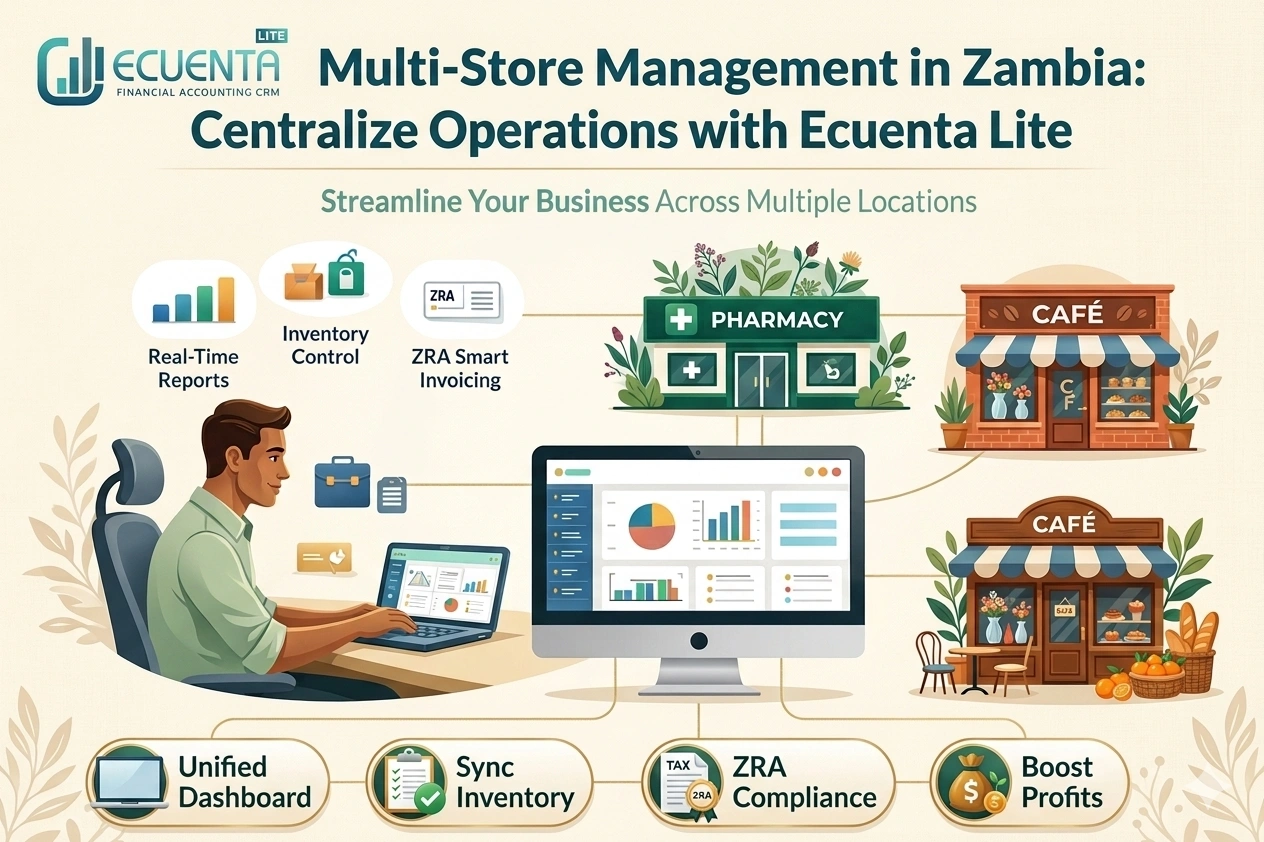
Solution: Centralize store data in one dashboard, accessible remotely. Ecuenta's multi-store integration lets owners review sales, stock, and performance across all locations from a single, mobile-accessible system.
Problem 5: Sales Data Isn't Used to Guide Decisions
Without proper reporting, stocking and pricing decisions are often based on assumption rather than data. A product assumed to be a bestseller may be underperforming, while another item is quietly outselling everything else. Without reporting, this pattern goes unnoticed.
Solution: Use real-time sales and inventory reports to identify what's moving, what isn't, and where margins are strongest. Ecuenta's reporting module converts transaction data into actionable insight, supporting decisions on what to restock, discount, or discontinue.
The Common Thread
Each of these problems traces back to the same root cause: information exists, but it isn't accessible at the moment it's needed. Stock counts exist informally. Sales data exists but isn't summarized. Tax requirements exist but aren't built into daily invoicing. A second location exists but isn't visible in real time.
Effective POS software in Zambia closes this gap. It doesn't just process sales — it makes store information available when decisions need to be made, which is what prevents small operational issues from becoming lost revenue.
Frequently Asked Questions
Conclusion
The problems outlined here — stock inaccuracy, slow checkout, inconsistent invoicing, limited multi-store visibility, and data-free decision-making — are operational, not incidental. Each one reduces revenue or increases risk in ways that compound over time if left unaddressed.
The solution is not simply adopting software, but adopting a system that makes accurate, real-time information available at the point it's needed: at checkout, at reorder time, at tax filing, and across every store location. For fashion retailers evaluating their options, the priority should be a POS platform built around these specific operational needs, with invoicing aligned to current Zambian tax requirements and reporting that supports informed decisions rather than assumptions.