- By Admin
- 09 Jun, 2026
- Restaurant POS
Running a restaurant is exciting, but it also comes with countless moving parts. From taking orders and managing tables to handling payments and monitoring inventory, restaurant owners have a lot to keep track of every day. While great food and excellent service are essential, efficient operations are what keep a restaurant profitable.
This is where restaurant POS software becomes a game-changer.
A modern Point of Sale (POS) system does much more than process transactions. It helps restaurant owners streamline operations, reduce errors, improve customer service, and gain valuable insights into business performance. However, not every POS solution is designed to meet the unique needs of restaurants.
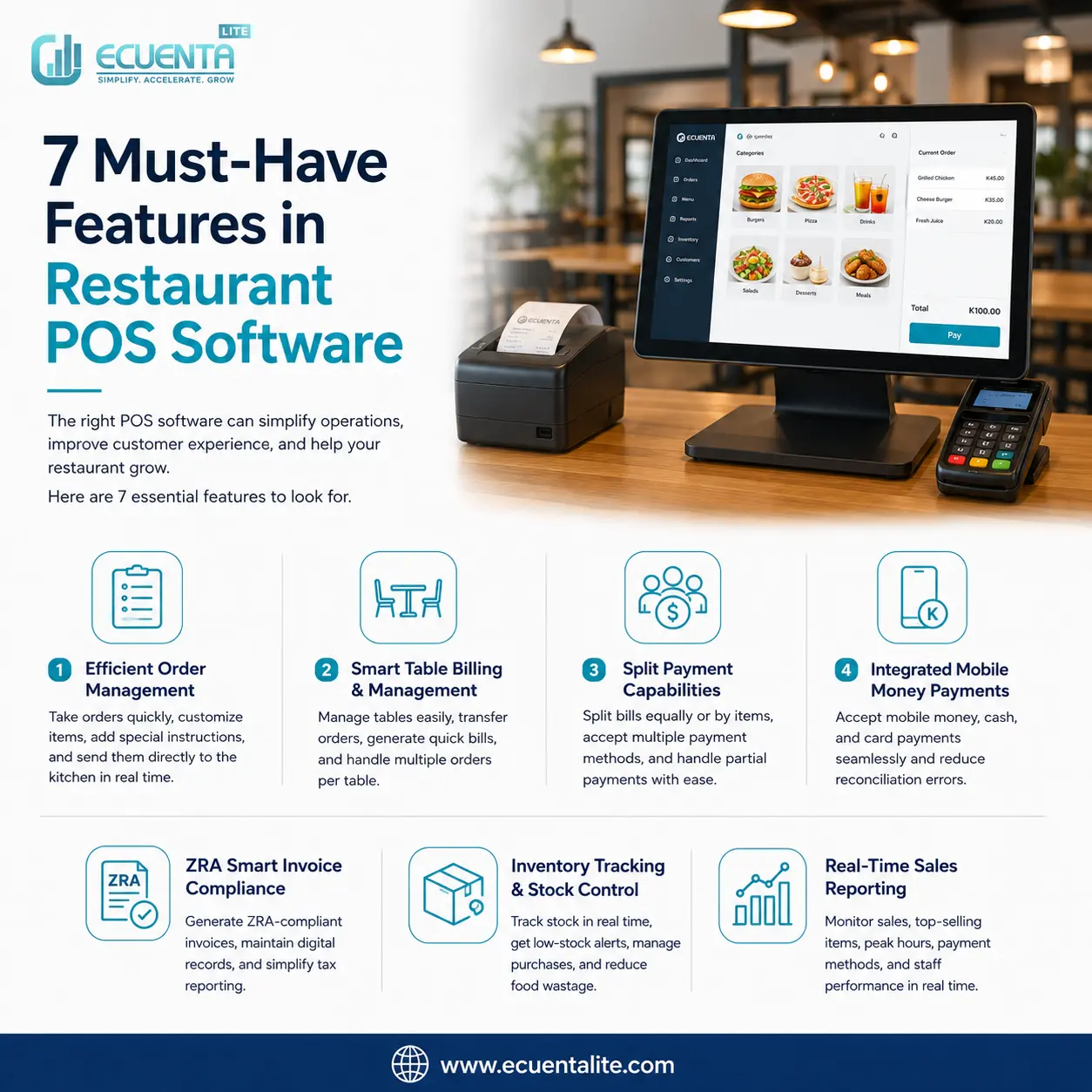
If you're looking for restaurant POS software in Zambia, here are seven essential features you should prioritize before making a decision.
1. Efficient Order Management
Order management is the foundation of every successful restaurant operation.
During busy lunch and dinner hours, staff need a fast and reliable way to capture customer orders and send them to the kitchen without delays. Manual order-taking often leads to mistakes, missed items, and communication issues between front-of-house and kitchen teams.
A quality restaurant POS system should allow staff to:
- Enter orders quickly
- Modify menu items easily
- Add customer notes and special requests
- Send orders directly to the kitchen
- Track order status in real time
With streamlined order management, restaurants can improve accuracy, reduce wait times, and create a better dining experience for customers.
2. Smart Table Billing and Management
Restaurants operate differently from retail stores. Customers are seated at tables, place multiple orders, and often request separate bills.
A restaurant-focused POS system should provide complete table management functionality.
Look for features such as:
- Table mapping
- Open and closed table tracking
- Transfer of tables between servers
- Quick bill generation
- Multiple orders per table
These capabilities help staff manage dining areas efficiently, especially during peak business hours.
For growing restaurants, table management also provides better visibility into occupancy rates and customer flow patterns, helping managers optimize seating arrangements and service efficiency.
3. Integrated Mobile Money Payments
Cash payments are no longer the only option customers expect.
Across Zambia, mobile money services have become an important part of everyday transactions, making digital payments more convenient for both businesses and consumers. Restaurants that accept multiple payment methods can serve customers more efficiently and reduce cash-handling challenges.
When evaluating POS software, ensure it supports:
- Mobile money payments
- Cash transactions
- Bank card payments
- Digital payment integration
An integrated payment solution eliminates the need for separate systems and reduces the risk of reconciliation errors.
Platforms such as Ecuenta combine POS functionality with payment processing capabilities, helping restaurant owners manage transactions through a single system while supporting modern payment preferences.
4. ZRA Smart Invoice Compliance
For restaurant owners in Zambia, tax compliance is an essential consideration when choosing POS software. The Zambia Revenue Authority (ZRA) has introduced Smart Invoice requirements to improve tax reporting and digital record-keeping.
A restaurant POS system should help businesses stay compliant by:
- Generating ZRA-compliant Smart invoices
- Recording transactions accurately
- Maintaining digital sales records
- Simplifying tax reporting processes
- Reducing manual data entry errors
Using POS software with built-in ZRA Smart Invoice integration can save significant administrative time while helping restaurants avoid compliance issues. Instead of relying on separate systems for billing and tax reporting, restaurant owners can manage everything from a single platform.
Solutions like Ecuenta combine restaurant POS functionality with ZRA Smart Invoice compliance, allowing restaurant operators to process sales, issue compliant invoices, and maintain accurate financial records without additional software.
5. Inventory Tracking and Stock Control
Inventory management is one of the biggest challenges in the restaurant industry.
Without proper tracking, restaurants often experience:
- Food wastage
- Overstocking
- Stock shortages
- Unnecessary purchasing costs
A restaurant POS system should automatically update inventory levels whenever a sale is made.
Important inventory features include:
- Real-time stock monitoring
- Ingredient tracking
- Low-stock alerts
- Inventory adjustments
- Purchase management
- Stock movement reporting
Real-time inventory visibility helps restaurant owners make informed purchasing decisions and avoid situations where popular menu items become unavailable.
Modern POS solutions like Ecuenta integrate inventory management directly into the billing process, ensuring stock levels are updated automatically as transactions occur.
6. Real-Time Sales Reporting
Successful restaurant management requires accurate data.
Without access to reliable sales information, it becomes difficult to identify trends, monitor profitability, or make informed business decisions.
A modern POS system should provide real-time reporting on:
- Daily sales performance
- Best-selling menu items
- Peak operating hours
- Revenue trends
- Payment method breakdowns
- Staff performance metrics
Instead of waiting until the end of the month, restaurant owners can monitor business performance as it happens.
Real-time reporting enables faster decision-making and helps identify opportunities to increase revenue and improve operational efficiency.
Ecuenta's reporting capabilities are designed to provide actionable insights that help businesses track sales performance and customer trends in real time.
7. Scalability and Multi-Location Management
Many restaurant owners start with a single location but eventually plan to expand.
Choosing a POS system that can grow alongside your business can save significant time and money in the future.
Look for software that supports:
- Multiple branches
- Centralized reporting
- Shared inventory visibility
- Multi-user access
- Cloud-based management
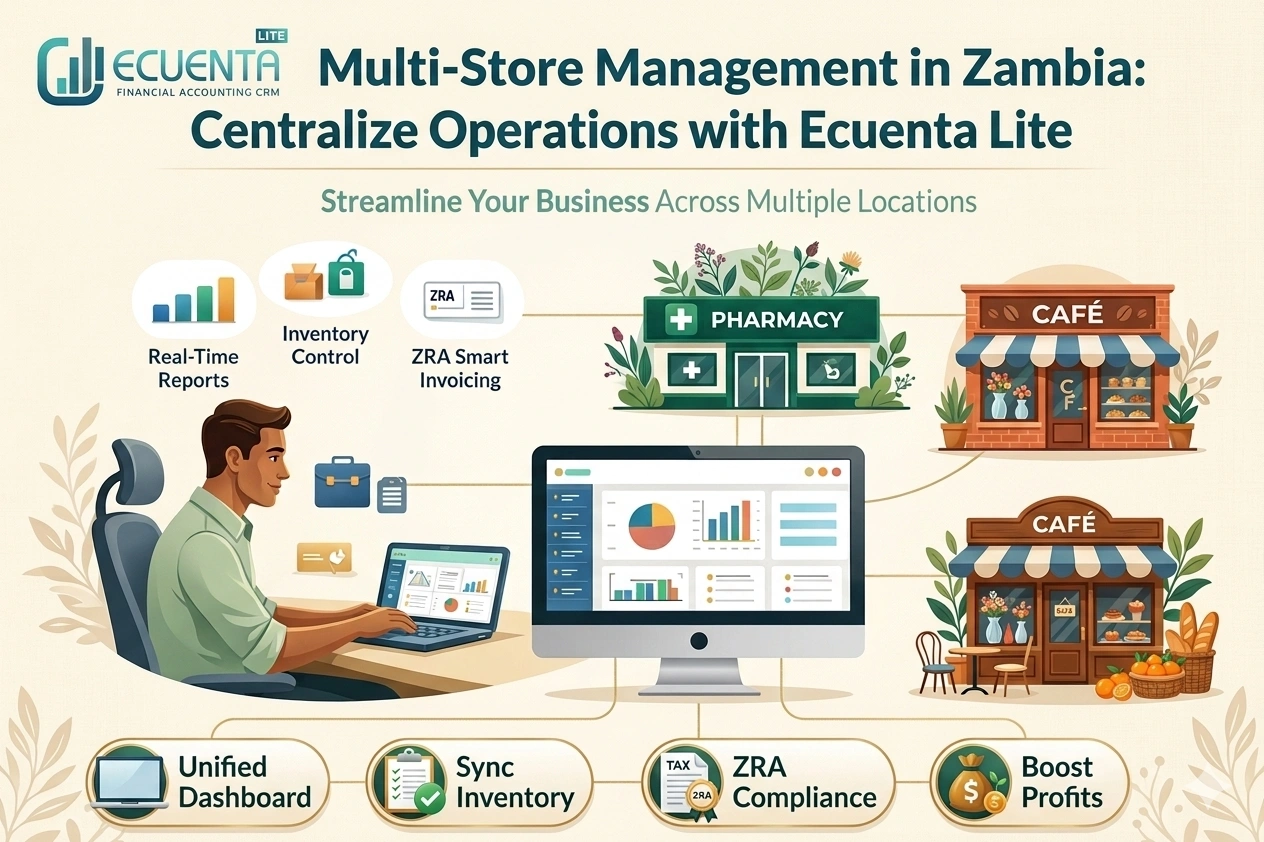
A scalable solution allows restaurant owners to manage all locations from a single dashboard while maintaining operational consistency across the business.
Cloud-based systems are particularly valuable because they provide access to business data from anywhere, enabling owners to stay informed even when they are away from the restaurant.
Ecuenta offers multi-store management and centralized reporting capabilities, making it a practical option for restaurant owners planning future growth.
Choosing the Right Restaurant POS Software
Restaurant technology should simplify operations, not complicate them.
When comparing POS systems, focus on features that directly support your day-to-day operations, including order management, table billing, split payments, inventory tracking, mobile money acceptance, and real-time reporting.
The ideal solution should combine these capabilities into one easy-to-use platform that helps staff work more efficiently while giving management complete visibility into business performance.
For restaurant owners in Zambia, an all-in-one platform like Ecuenta offers a strong combination of POS functionality, inventory management, smart invoicing, payment integration, and business reporting. By bringing these essential tools together, restaurants can improve customer service, streamline operations, and position themselves for long-term growth.
Frequently Asked Questions (FAQs)
1. What is restaurant POS software?
Restaurant POS software is a system that helps restaurants manage orders, process payments, generate bills, track inventory, and monitor sales from a single platform. Modern POS solutions also provide reporting tools that help restaurant owners make informed business decisions.
2. Why is inventory management important in restaurant POS software?
Inventory management helps restaurants track stock levels in real time, reduce food wastage, prevent stock shortages, and control purchasing costs. A POS system with built-in inventory tracking automatically updates stock whenever a sale is made, improving accuracy and efficiency.
3. Can restaurant POS software support mobile money payments in Zambia?
Yes. Many modern restaurant POS systems support multiple payment methods, including mobile money, cash, and bank cards. This flexibility allows restaurants to serve customers more conveniently while simplifying payment reconciliation and record-keeping.
4. What features should I look for in restaurant POS software?
The most important features include order management, table billing, split payments, inventory tracking, mobile money integration, real-time sales reporting, and multi-location management. These features help streamline restaurant operations and improve customer service.
Final Thoughts
A restaurant's success depends on more than great food. Efficient operations, accurate billing, effective inventory control, and real-time business insights are equally important.
Investing in restaurant POS software with the right features can help reduce operational challenges, improve customer experiences, and increase profitability.
Before choosing a solution, evaluate your restaurant's current needs and future goals. The right POS system should not only solve today's challenges but also support your growth as your business expands.